Mass Market · Decentralised commerce
Making blockchain commerce feel familiar to people setting up a shop.
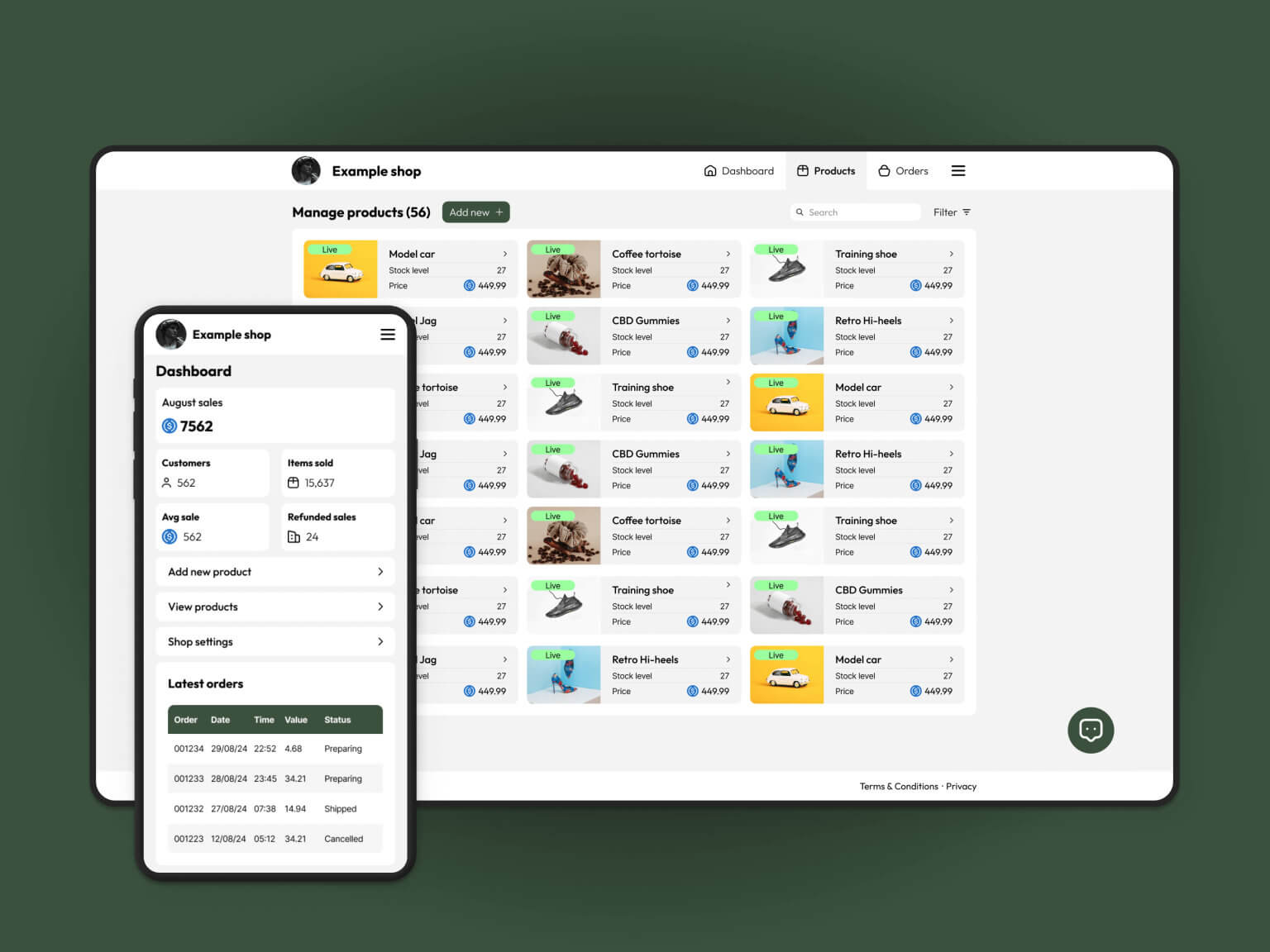
I designed a marketplace where people could create a shop, manage products and accept cryptocurrency without needing to understand every part of the technology behind it.
- Client
- Mass Market
- Role
- Product designer
- Team
- 1 designer, 1 product manager, 3 developers
- Duration
- Two months with later updates
The problem
The platform worked differently from the online shops people already knew.
Familiar e-commerce flows normally depend on email accounts, conventional authentication and a central server. Mass Market could rely on none of those things.
Sellers needed to create a shop and recover access through the blockchain, while customers needed to connect a wallet and pay with cryptocurrency without losing the confidence of a normal checkout.
What needed attention
Hide the technical burden, not the decisions people needed to make.
-
Two different groups of users
Shop owners needed onboarding, credentials and management tools. Customers needed a simple route from product to wallet payment.
-
Access without email recovery
Credentials had to be generated and retrieved securely from the blockchain rather than sent through email.
-
An early product that would continue to change
The first design system had to be useful and buildable without locking an experimental product into a heavy visual identity.
Finding the familiar parts
Use established commerce patterns wherever the technology allowed.
I began with competitor research and stakeholder interviews, looking at both conventional marketplaces and blockchain products. The goal was to identify which interactions could remain familiar and where the underlying model demanded a new approach.
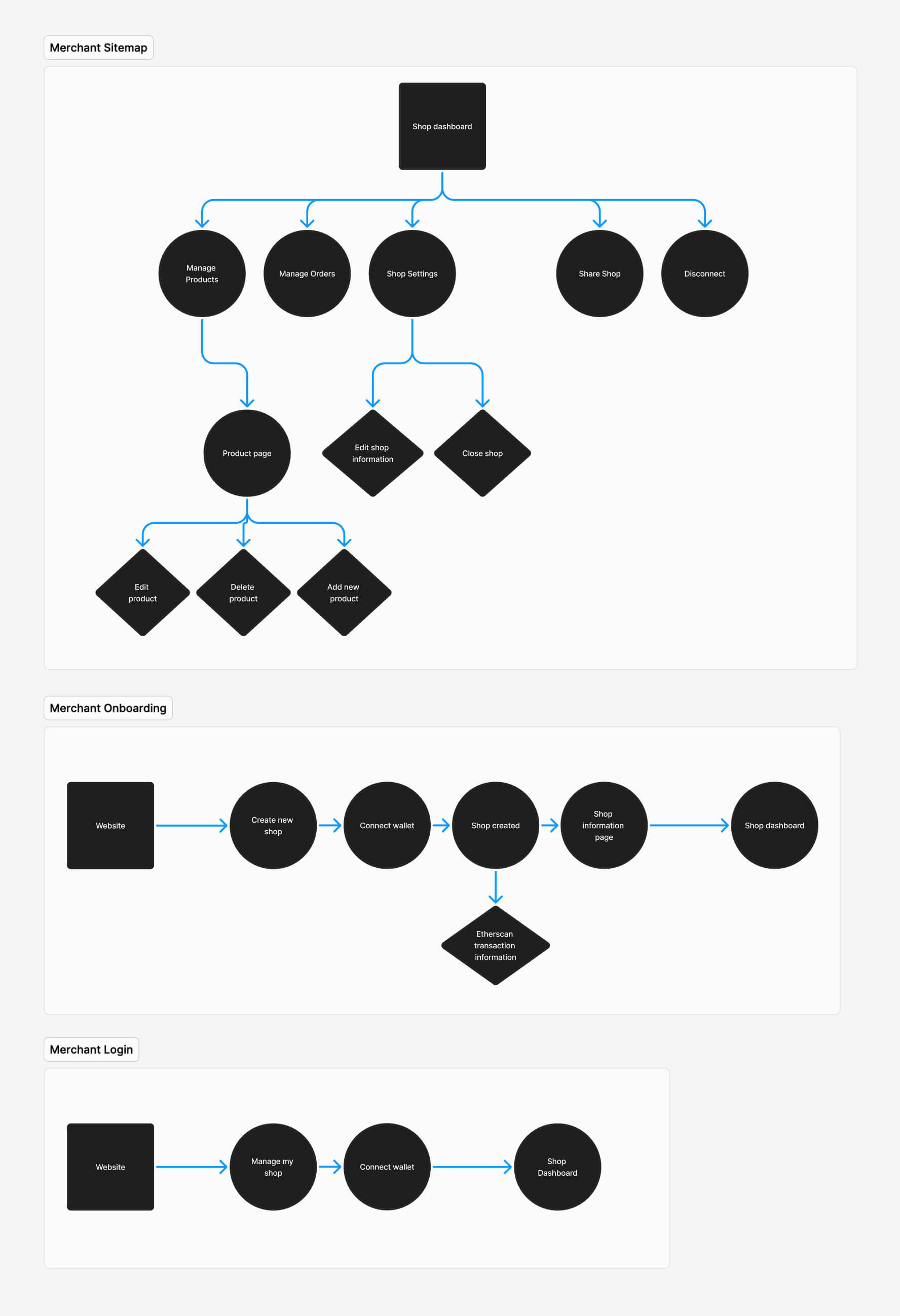
I mapped the platform by user type, covering shop creation, authentication, product management, shopping and payment. That gave the team a shared view of the edge cases before detailed screens made them expensive to change.
Guiding shop owners through the unfamiliar steps
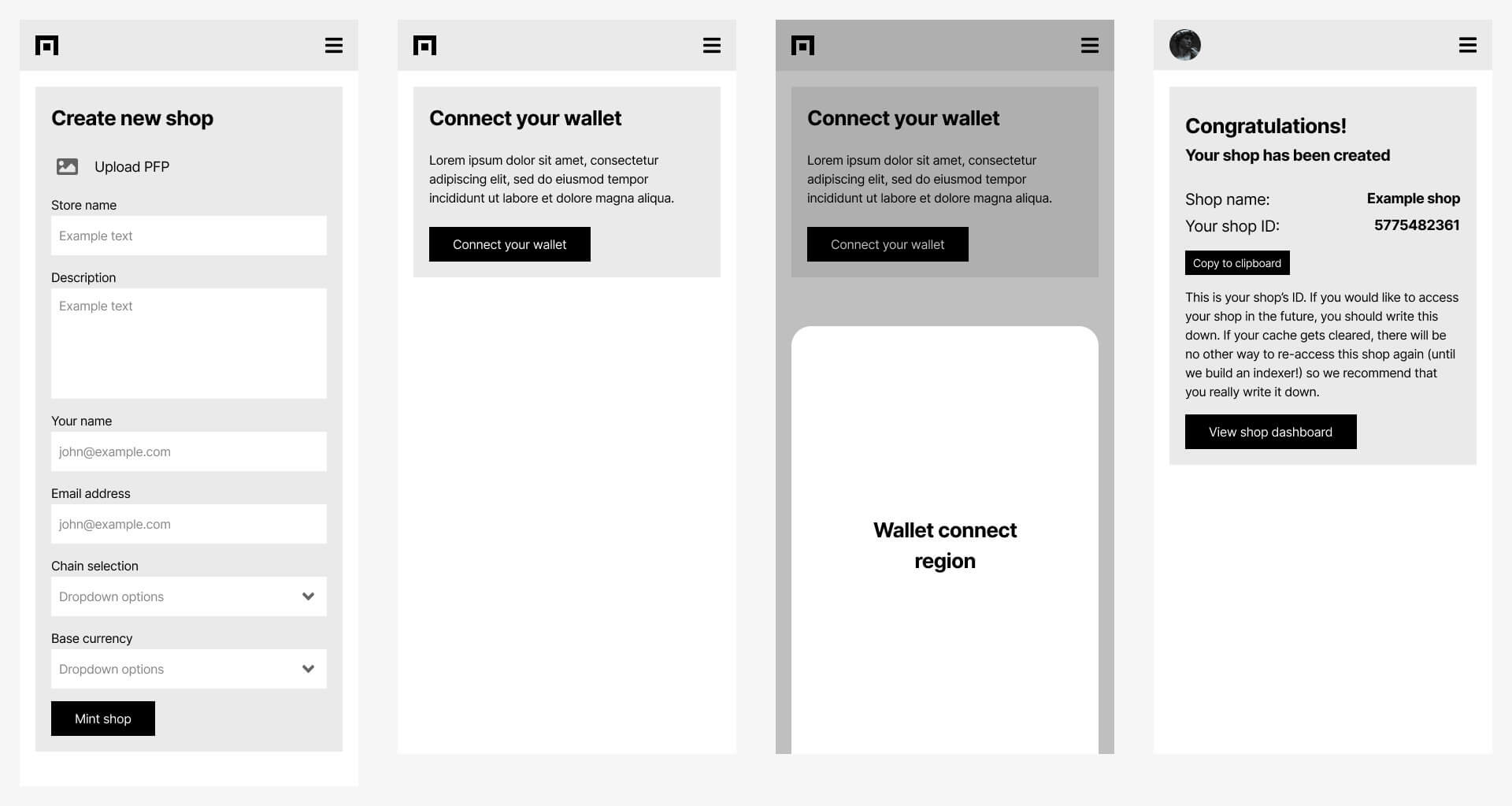
The onboarding flow carried the most unfamiliar risk. New shop owners needed to configure their store, connect a wallet and retrieve credentials from the blockchain without an email-based safety net.
I broke the process into clear, sequential decisions and made the consequences of storing credentials explicit. Familiar form patterns did the explanatory work wherever possible.
The interface explained what someone needed to do next, while the decentralised architecture stayed in the background.
Showing the right information for each task
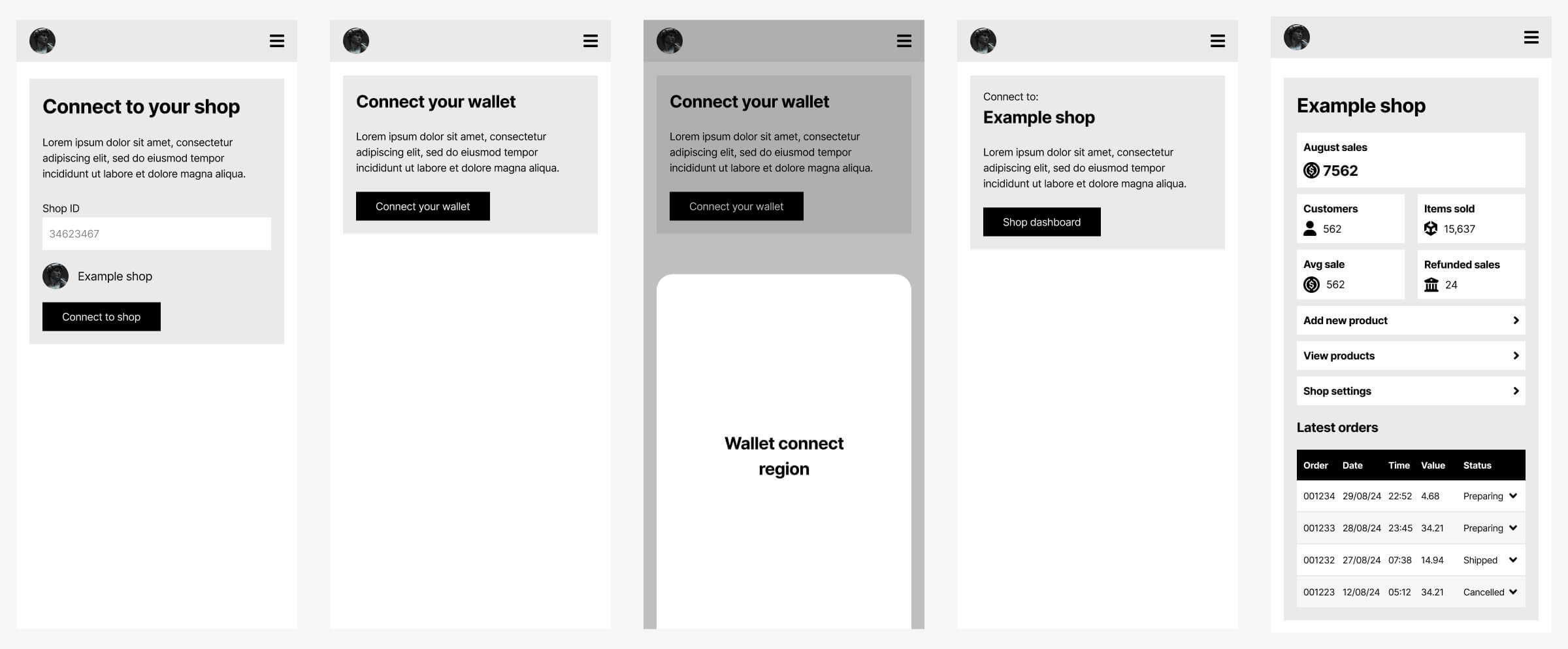
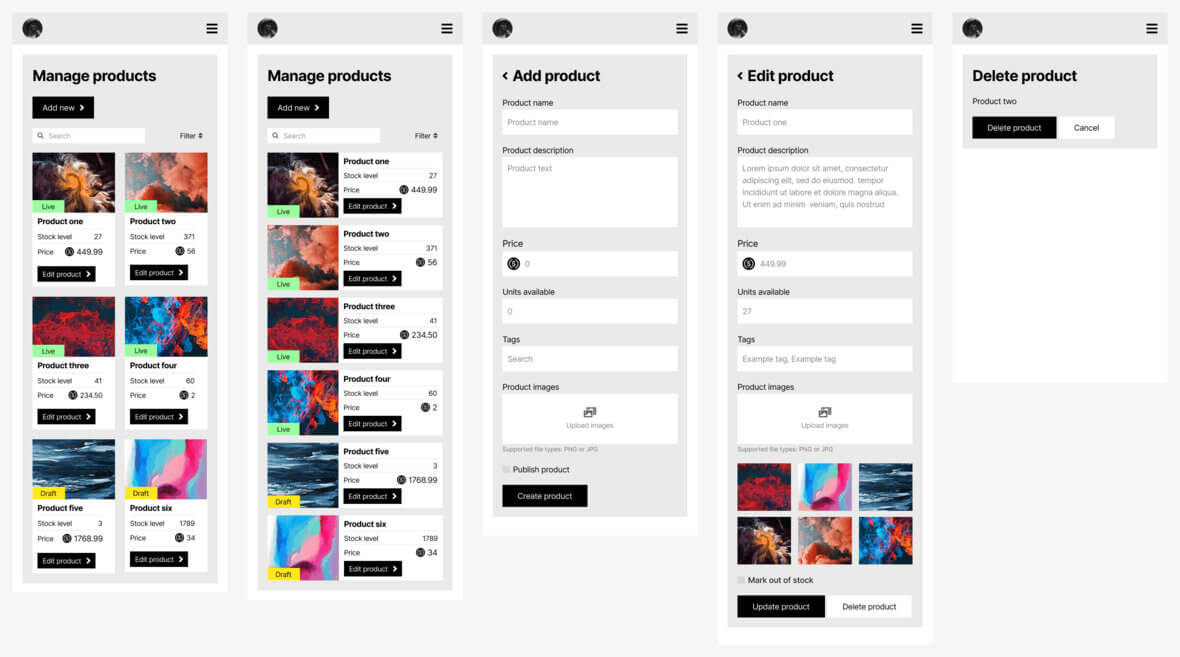
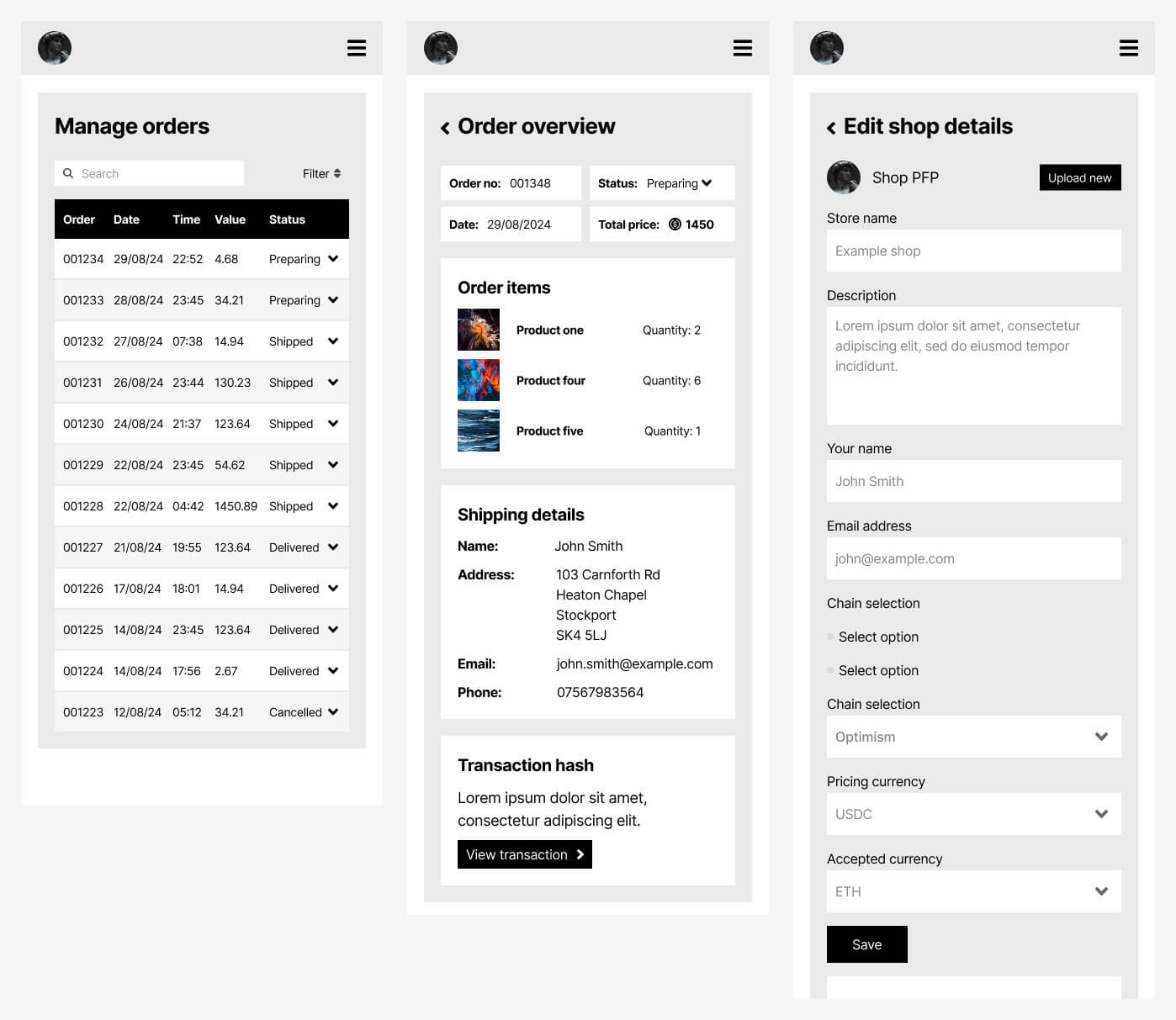
Rather than expose every blockchain state everywhere, each flow surfaced only the information relevant to the current task. Sellers received operational tools; shoppers received a clean product and checkout journey.
Keeping the first design system light
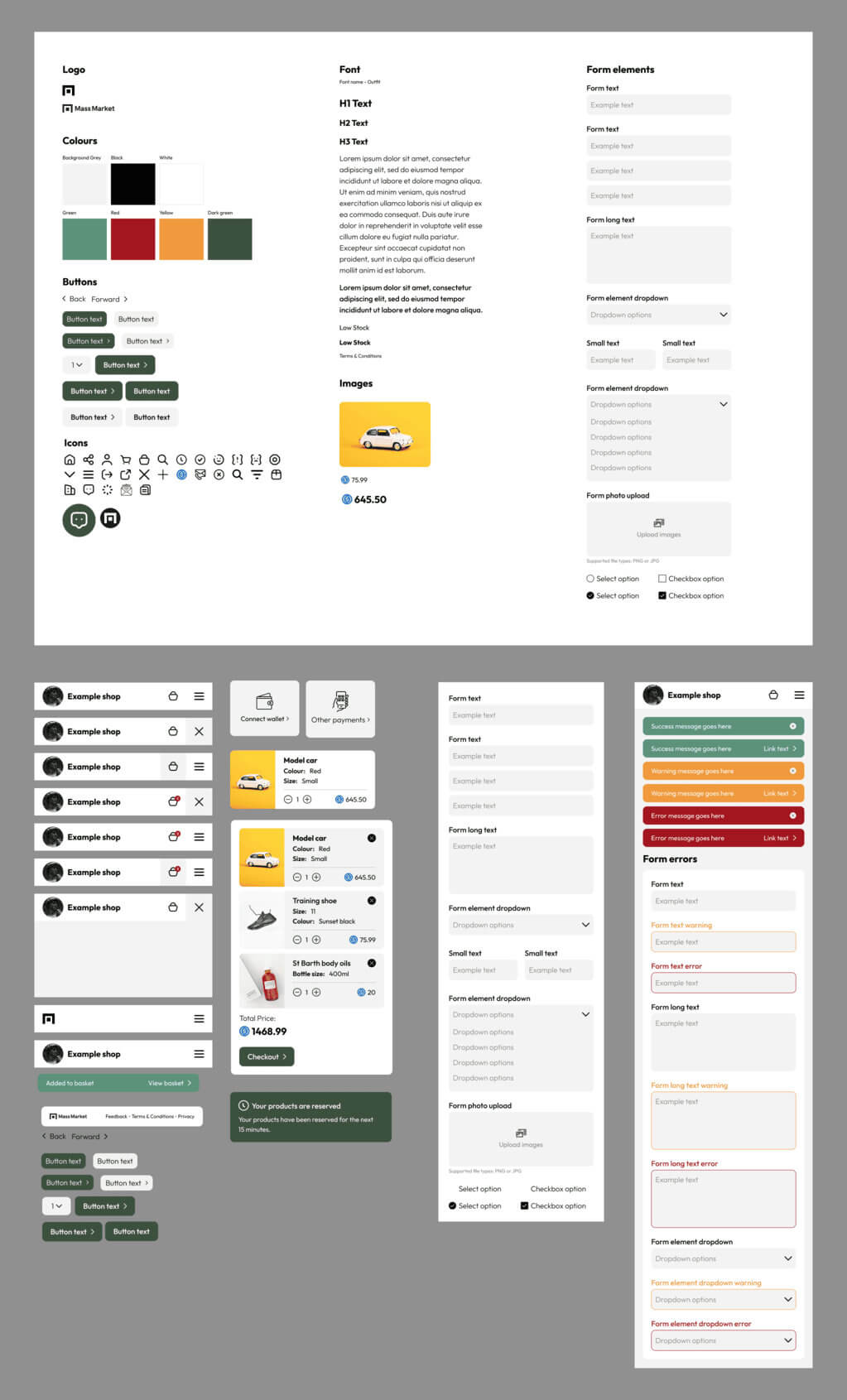
This was the first iteration of the platform. A highly branded system would have created certainty the product had not yet earned.
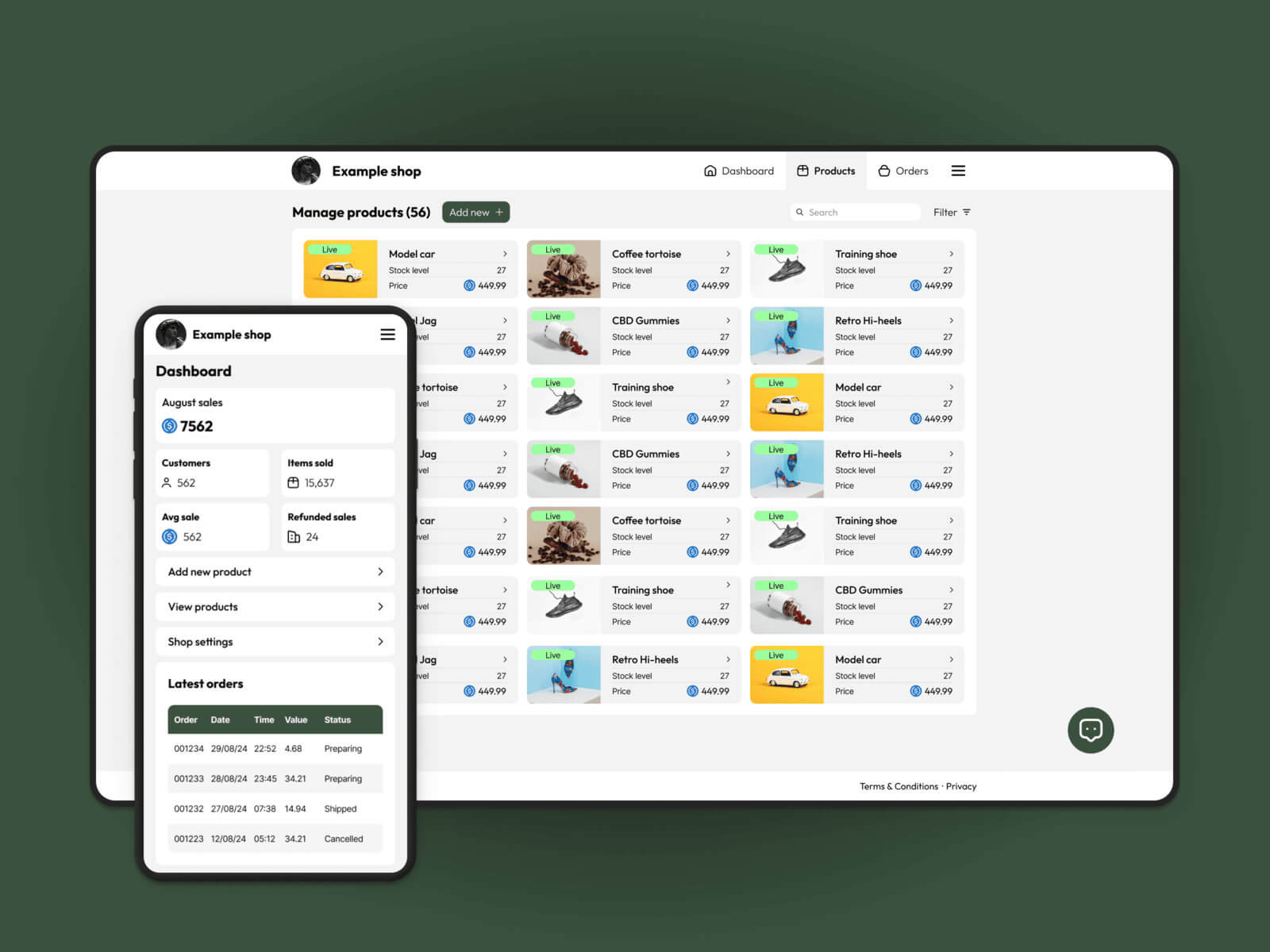
I used Bootstrap as a practical foundation, then designed a clean set of responsive components for the storefront, seller dashboard and wallet states. The team could move quickly while retaining space to learn and evolve.
Delivery
Prototyping the complete journey
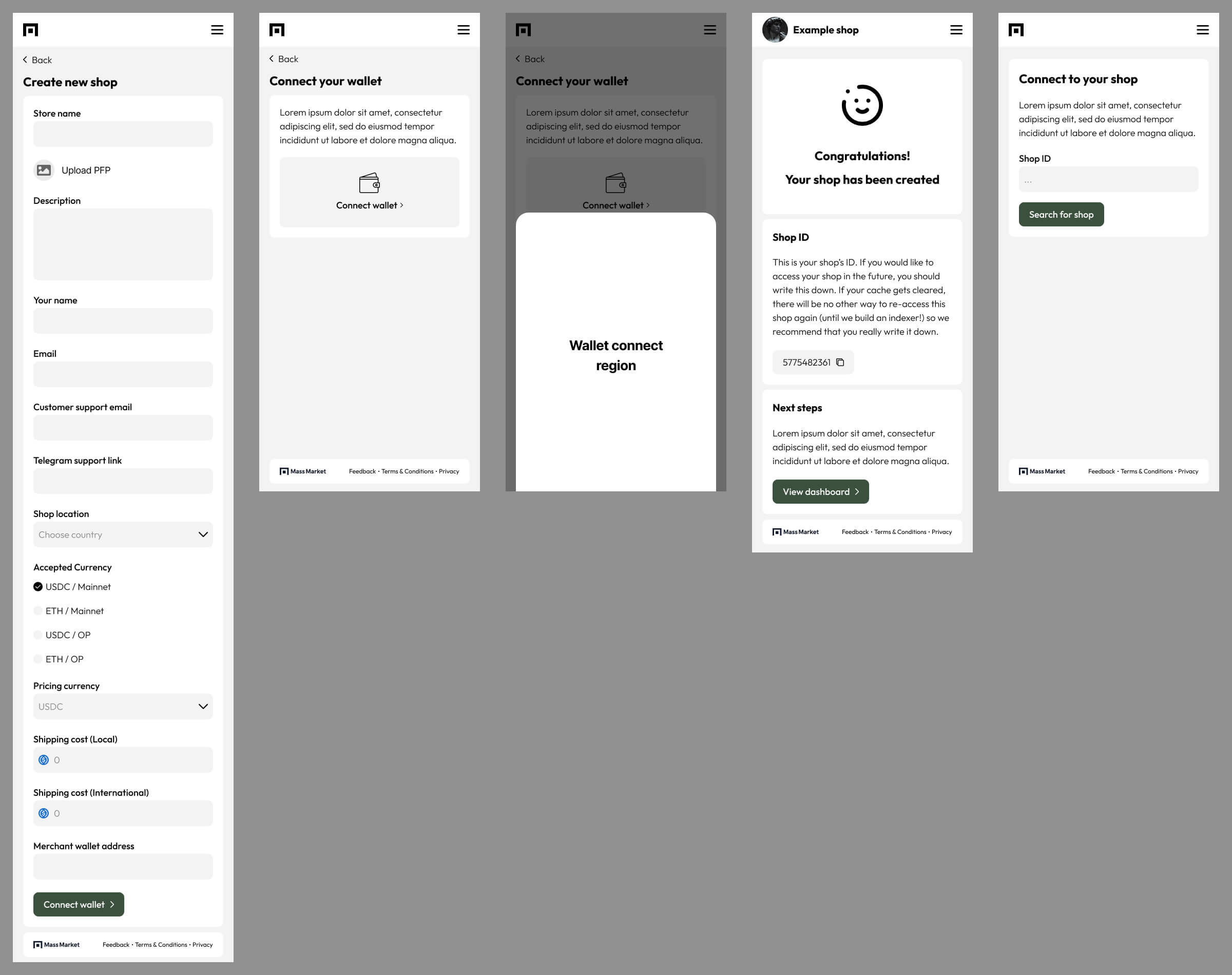
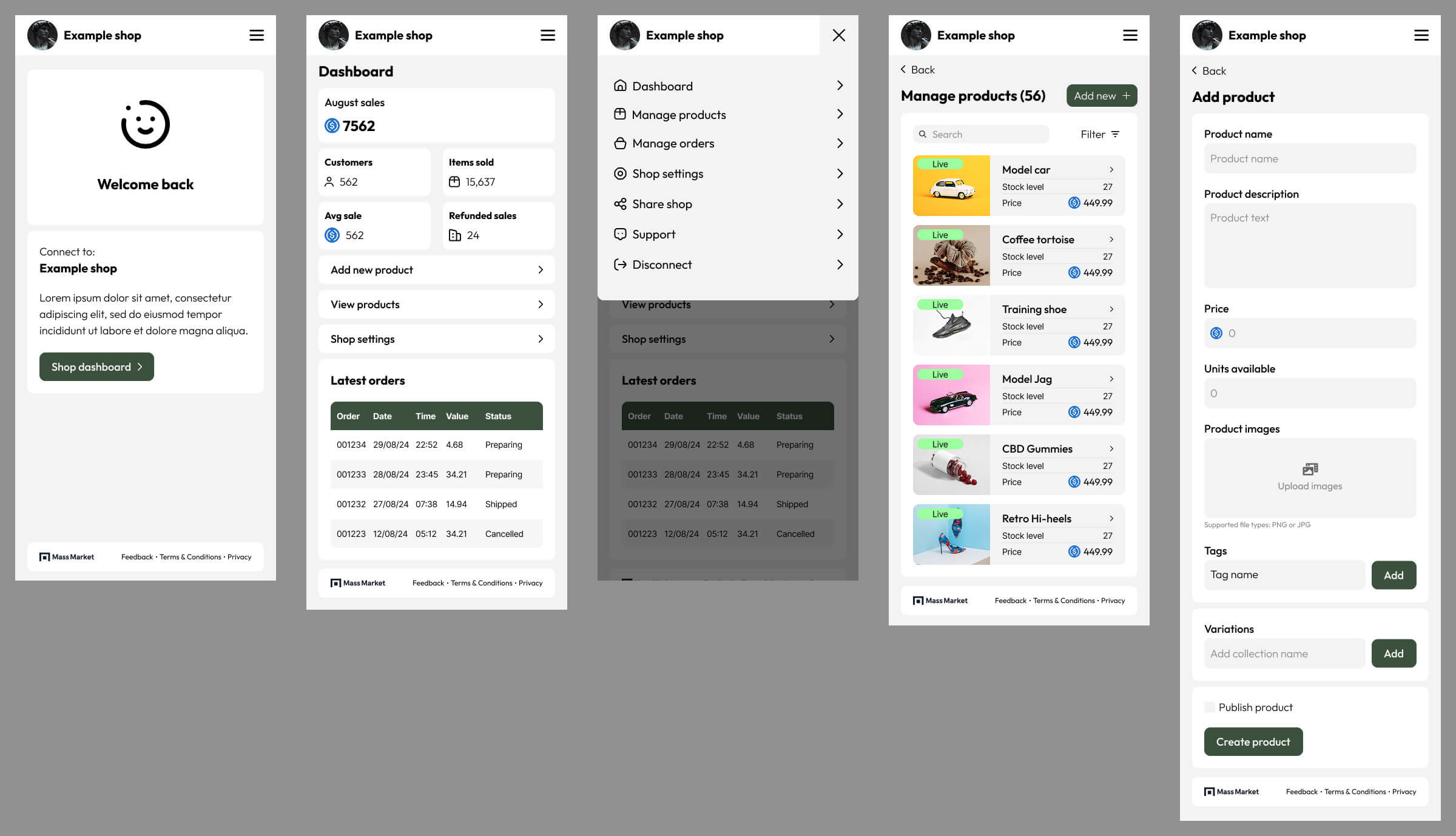
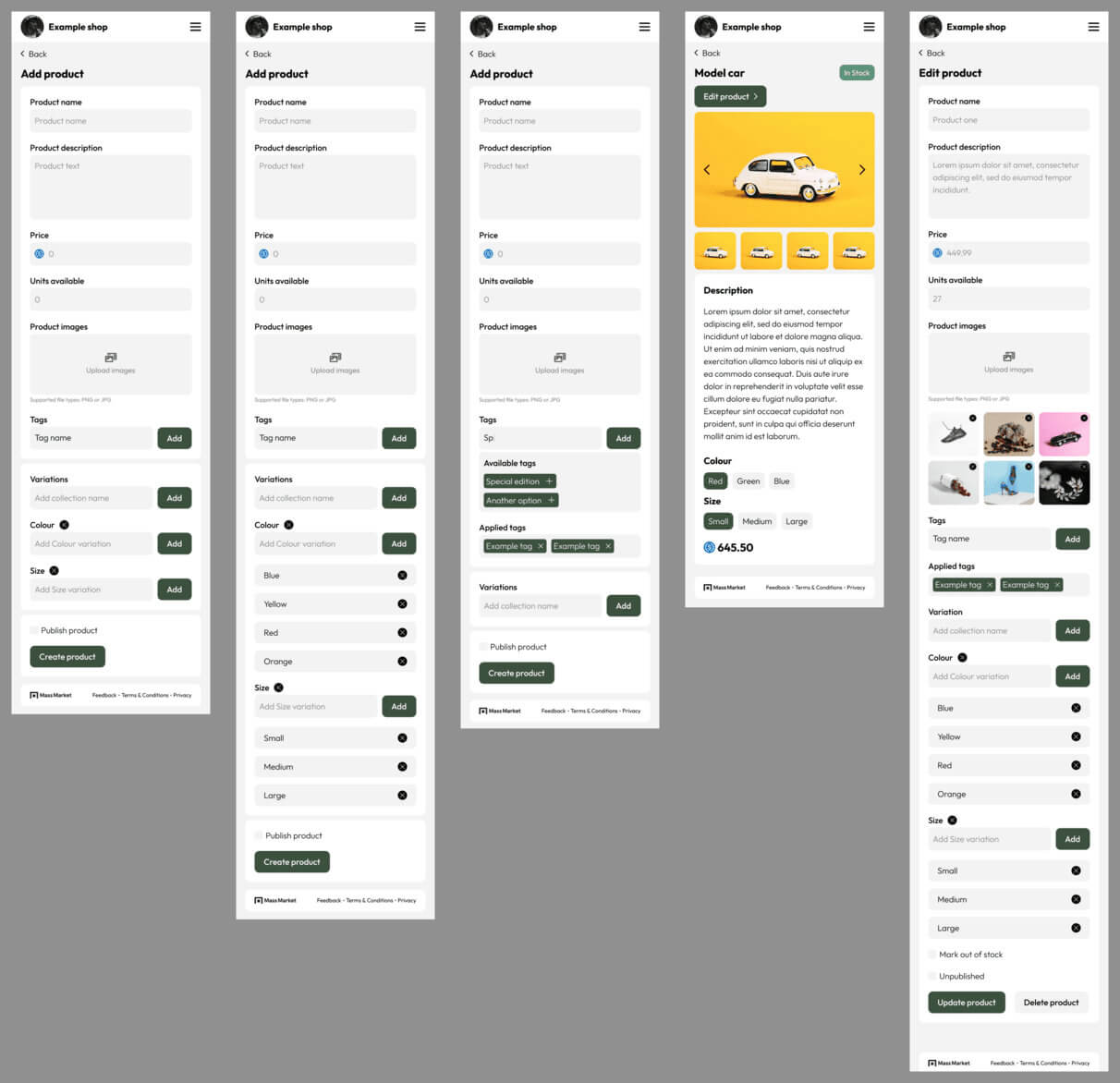
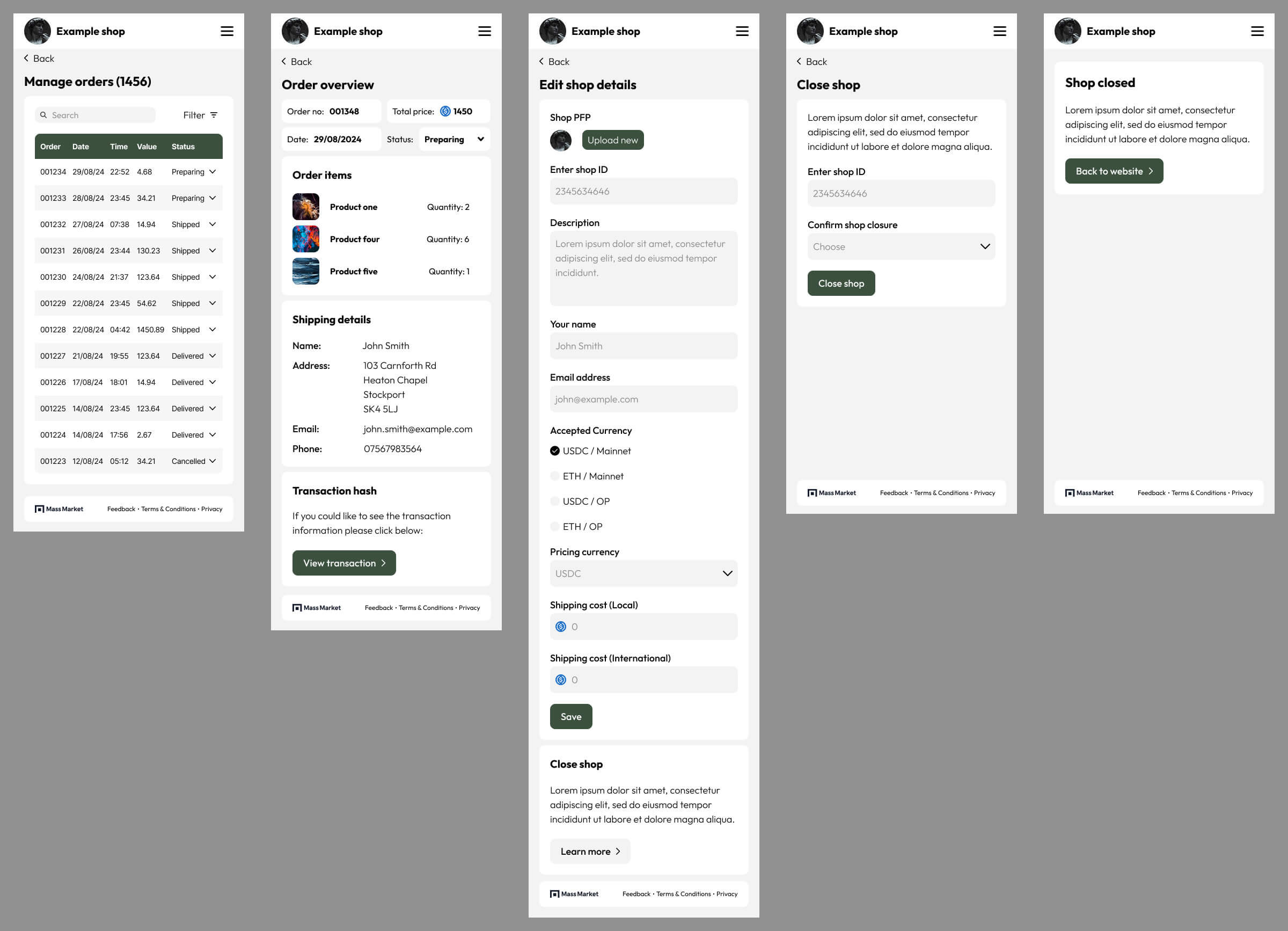
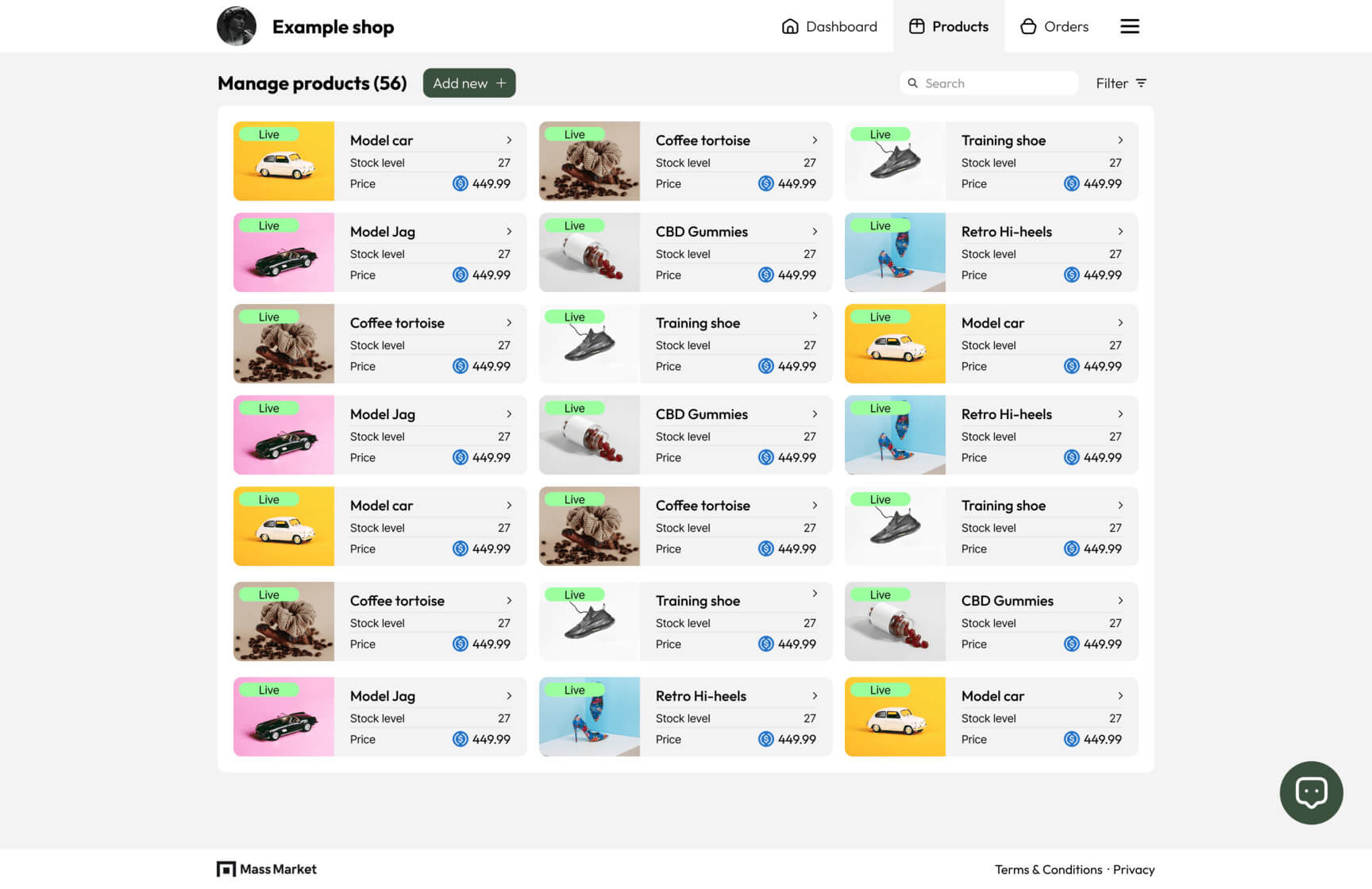
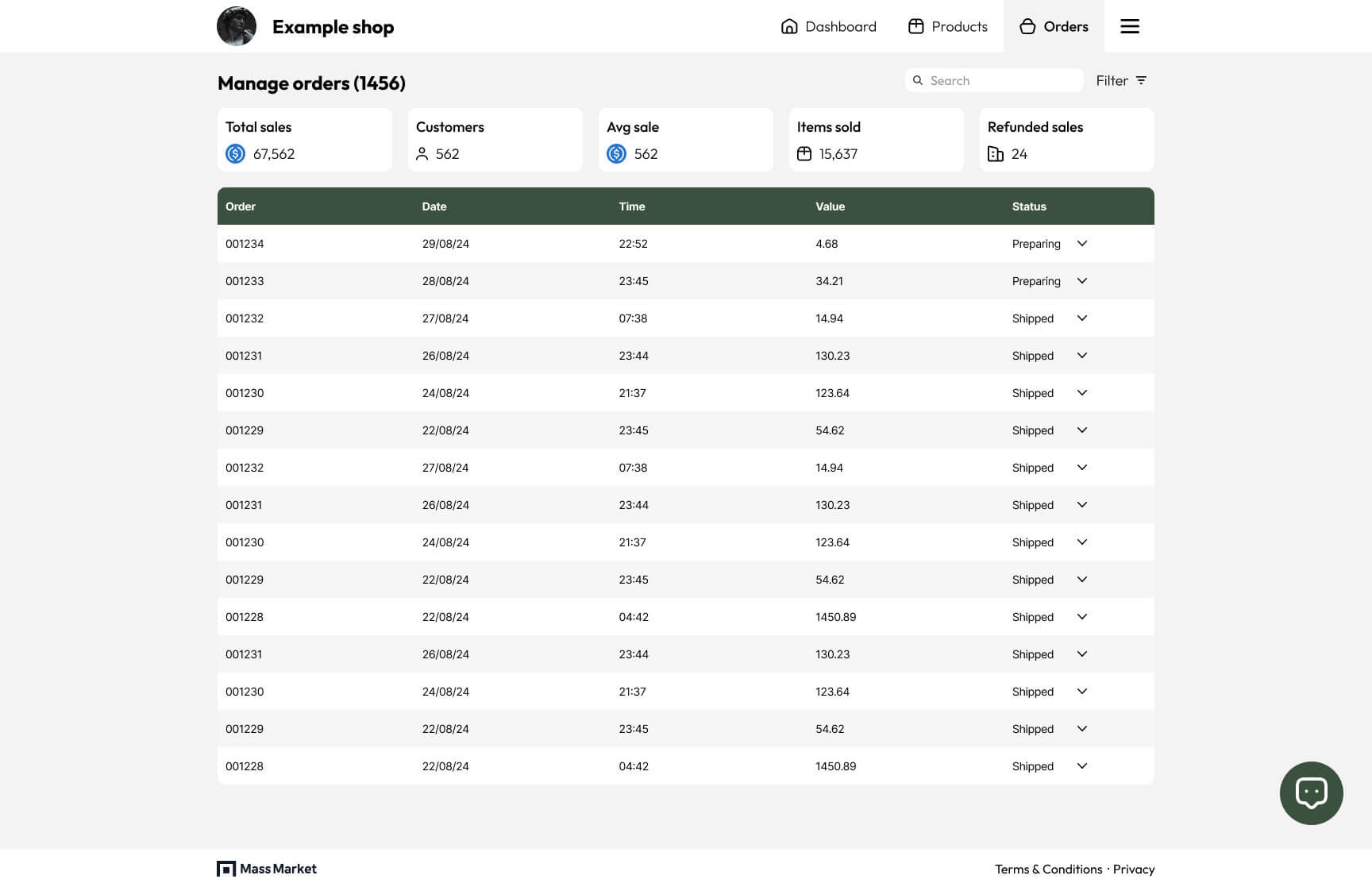
Interactive desktop and mobile prototypes included the detailed flows and annotations engineering needed to assess feasibility and move into implementation.
The outcome
A credible commerce experience built around an unfamiliar model.
The project moved from a blockchain concept to a coherent, responsive product: guided shop setup, wallet-based access, seller management tools and a customer purchase journey ready for engineering.
The design did not try to make the technology disappear. It made sure people encountered it only when it changed a decision they needed to understand.